Wednesday, 20 August 2014

Fire Alarm Maintenance & Installation in London


Do you have a fire alarm maintenance contract in place? If the answer is no, then it is something you ought to start to think about - and sooner than later. It could literally be the difference between life and death.

You've probably got a fire detection method in situ and gone through the whole arduous method of lengthy assessments, the installation and acceptance and you have possibly had the odd service carried out on your method. However, all of this might show futile if it is not meticulously maintained. It can be a feasible lifesaver, so it is essential to implement a service schedule in order to make sure your Fire Alarm Maintenance London is regular, consistent and always up-to-date. It ought to be an integral part of your fire protection strategy. Any maintenance ought to be undertaken by a professional fire alarm specialist and a log ought to be done and kept on site at all times.

Fire Alarm Maintenance London


In the unfortunate event of a fire situation, irrespective of whether you have fire detection or protection method installed in your building, your insurance company will judge the finish result of any claim based on whether or not the method was fully maintained and operational at the time of the incident. So it makes sense to invest a comparatively tiny amount of money now and have complete peace of mind regarding ongoing maintenance.

A maintenance contract will usually consist of various benefits - including specialist advice on your method operation, which ought to also highlight the necessity for every week tests. Most contracts will include a dedicated 24-hour emergency call-out facility, 365 days a year. Only fully trained and qualified, multi-disciplined engineers ought to be authorised to carryover out any maintenance. There will usually be a maximum of scheduled service visits included within an annual fire alarm maintenance contract. In addition a full document ought to always be provided together with any recommendations, as necessary.

It is a legal requirement to have your technique regularly checked so taking out a fire alarm maintenance contract makes total business sense. It is essential to make positive that all work is carried out in accordance with BS5839, the British Standard that regulates the service & general upkeep of all fire alarm systems in the United Kingdom. You could also save money & time, as well as lives, by combining all of your fire protection technique services together by including fire risk assessments, extinguisher maintenance & fire safety training within a single renewable contract.

Further information is obtainable from specialist service companies providing fire alarm servicing & fire alarm maintenance contracts.


Follow On: Twitter | Facebook | Pinterest
 

Friday, 8 August 2014

Improving Employee Safety with Confined Space Training


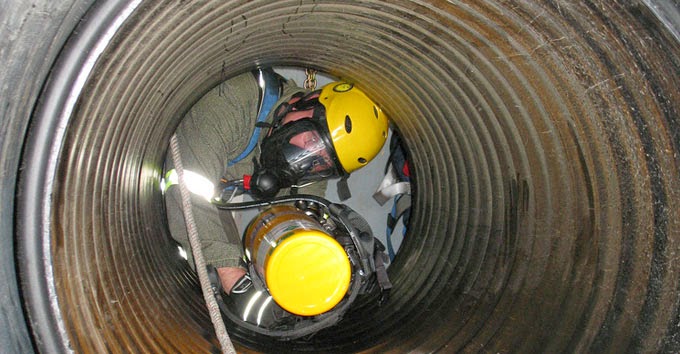
According to OSHA (Occupational Safety & Health Administration) standards, a confined space is that "has limited or restricted means for entry or exit" & "is not designed for continuous worker occupancy." These types of spaces are so restrictive that employees trying to get in or out of them will struggle to conduct their jobs properly. Confined space accidents are of special concern to OSHA because they often involve multiple fatalities or injuries which occur when untrained rescuers suffer to the same fate as the preliminary victim.

Confined Space Training in Essex equips workers with the skills & knowledge necessary to make sure safe entry to confined spaces, including such precautions as testing of air quality, forced ventilation, proper observation & monitoring of workers in the space, & a rescue procedures using appropriate safety harnesses & other equipment. Among those the spaces that are thought about confined spaces are storage bins, tanks, manholes, vaults, pits, & pipelines. A "permit-required confined space" (permit space) is characterized by OSHA as a space with the following:

Confined Space Rescue Teams London


·         Dangerous or potentially-hazardous surroundings.
·         Substances that can consume the person in the area (engulfment).
·         Walls that cave inwards or sloping floors that lead to a smaller space that can trap the entrant.
·         Other safety hazards such as machines, live wires, or heat.

Many companies have these spaces in their workplaces. Management may find it hard to decipher which safety standards they ought to follow, and what requirements must be met to adhere to OSHA standards for worker safety training. Companies must follow OSHA requirements for occupational safety contained in 29 CFR 1910.146, which sets forth the training, documentation, and procedure requirements necessary to protect employees working in permit spaces. It is imperative that employees and employers are knowledgeable regarding the hazards of confined spaces, as well as the safety precautions necessary to protect them from danger. Hazards such as environmental toxins and engulfment can be avoided when everyone is properly trained on the latest safety standards.

Getting trained in a classroom setting or online are both acceptable to meet OSHA requirements. Online training is convenient because it is obtainable to everyone without having to travel, & facilitates the completion of the work when the employee's schedule allows. Classroom-based training may even be beneficial because the training can be custom-made according to the company's operational hazards & specific needs, although scheduling the actual training may be difficult. Whichever option a company chooses, it ought to make positive that employees undergo Confined Space Training to make positive safety at job sites & to keep away from being penalized by OSHA for non-adherence to regulations.

For over 15 years, First Intervention Training Ltd. has been offering Confined Space Training in Essex & London.


Follow On: Twitter | Facebook | Pinterest

Wednesday, 30 July 2014

Gas Detection & Maintenance Services in London By FIT


 Gas Detection Hire


Although a large percentage of residents in the United Kingdom use gas appliances & flues, many of these people are unaware of the dangers that these appliances can present. If a gas appliance or flue is installed incorrectly or is not ventilated properly, there is a high risk of carbon monoxide poisoning.

The lack of taste, color, and scent merge to make the poisonous gas, carbon monoxide (CO), impossible to detect. A number of the effects of carbon monoxide are stomach and chest pains, vomiting, tiredness, and even death. Carbon monoxide leaves the body quickly, and blood and breath tests used to decide the presence of carbon monoxide may be ineffective hours after exposure to the gas.

Researchers at the University of London, under the direction of the HSE (Health &Safety Executive), revealed some startling statistics from a residential carbon monoxide study. One or more gas appliances were found to be defective in 25% of homes in the study, & high risk of carbon monoxide poisoning was present in 8% of these homes.  50% of the residents in the study did not have adequate knowledge about the health risks of carbon monoxide. Everyone living in a residence is in danger for a variety of illnesses, paralysis, & death if basic gas safety rules are not followed. The shortage of gas safety schooling is obvious; over 60% of carbon monoxide-related deaths are the result of an improper response or the total lack of response to a gas appliance malfunction.

For gas appliance installations, repairs, safety checks, and maintenance, do not permit anyone except a registered technician to perform the work. Only service workers have the expertise and skills to safely and expertly complete a gas appliance job. Do not be tempted to hire any service technician for the recommended annual service checks for your gas appliances. Look for a registered technician for this job, and use a qualified chimney sweep to give your flue a thorough cleaning every year.

Gas Detection Maintenance
The area around the gas appliance or flue must be well ventilated so the gas can burn. Keep objects off the appliances, do not block vents, and be definite there is plenty of fresh air circulating through the room. Poor ventilation is of the most prevalent causes of residential carbon monoxide poisoning.

Any gas appliance that is not working properly ought to be turned off promptly. To bring fresh air in to the area, open all windows and doors. In the event you understand how to turn off the gas supply line, do so. Indications that a gas appliance needs to be checked are pilot lights that do not stay on, a yellow-orange flame, and noticeable soot and stains on and near the appliance.


Follow On: Twitter | Facebook | Pinterest