Showing posts with label Confined space training London. Show all posts

Monday, 5 January 2015

How Confined Space Rescue Services Can Help


If you work in an industry with workplaces that include tanks, manholes, wells, tunnels, or other tiny areas, you may be in need of Confined Space Rescue Team in Essex. Anytime that workers need to do their job in small areas, it is a good suggestion for a company to have a contract with safety supervisors experienced in rescuing people from small areas. If people not experienced in this hazardous type of rescue try to help people their own, they could finish up worsening the situation by putting either the needs help or themselves in greater danger than before.

Be Aware Of Hazards

Usually, these spaces are enclosed or partially enclosed & are not designed for human occupancy, have a restricted entrance or exit, & can pose a risk to the health & safety of somebody who enters. They can include, but are not limited to, underground vaults, wells, storage bins, manholes, silos, pits, pipelines, sewers, & open ditches. Because of the design & construction of most confined spaces, along with any materials or substances in it, these spaces are thought about hazardous.

Not only are these areas usually smaller, but the margin for error is also smaller. Any mistake in assessing the potential hazards can have serious consequences for the victim. Also, conditions in the area can change quickly - for example, if a barrier breaks and water begins flooding in to the space. This unpredictability means that having an experienced, reliable Confined Space Rescue Team in Essex is important.


Some of the hazards associated with spaces such as these include poor air quality, temperature extremes, shifting and collapsing of materials, barrier failures, and various fires, chemical, and biological hazards. Not having oxygen is of the largest issues and reasons for needing a rescue team to help out. The atmosphere in the space could contain a poisonous substance, or natural ventilation could not be to let the stuck person breathe normally.

Methods Used By Confined Space Rescue Teams in Essex

One of the first pieces of equipment that rescuers will use in a confined space provides ventilation for fresh air and getting rid of dangerous gases. Any organization with confined space rescue services will make sure that a ventilation system, along with some kind of line or rope to send down to the person, is quickly put in to place. This lifeline is usually a kind of strap that the incapacitated person can put around their wrist or ankle. One time the strap tightens around their arm or leg, rescuers can work to lift the person out of the confined space.

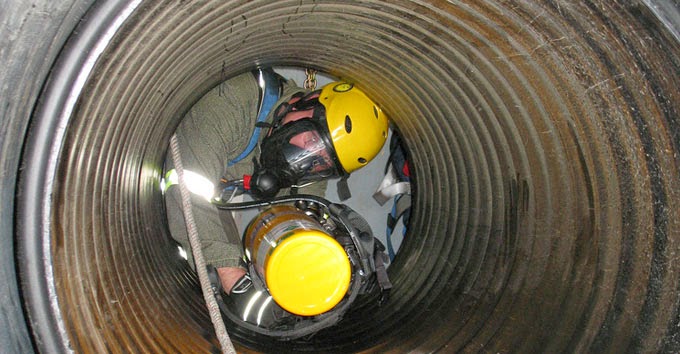
If the rescuers need to actually go in to the space, they will wear protective clothing like headgear, gloves, and coveralls. Before entering the area, rescuers will check the air quality of the space and wear self-contained breathing apparatuses (SCBAs). They also may have a full body harness with an attached safety line to help them lower in to the space, if it involves a vertical descent.
About Company: First Intervention Training Ltd (FIT) have experienced, highly trained Confined Space Rescue Team in London & Essex and regularly put through drills at our training centre to ensure that they can handle with any situation. Call FIT on: 01375 676779.

For More Details Please Visit: http://www.firstinterventiontraining.com/

Follow On: Twitter | Facebook | Pinterest

Friday, 17 October 2014

Confined Space Rescue Training in Essex & London


Confined Space Rescue Trainings help employees deal with dangers, the work in the area, and be aware of what steps they must to take if something should go incorrect. Workers like, linemen often must crawl down inside underground vaults and live safe in spaces. Additionally, they climb poles and structures and must discover a process to get their co-workers down in the event of harm.

Communication:

Communication among co-workers or among rescue teams needs to be constant throughout the entire process. As a substitute, rescue procedures include hard line communication equipments that will continue to work inside a variety of metal containers and at great depths. A great part of Confined Space Rescue Trainings in Essex includes having to lift the sufferers from the space.


Risks and Safety Equipments:

Risks of confined spaces involve low oxygen level or injurious vapours. It is impossible to smell oxygen or some poisonous gases, so the human nose is not a reliable source of indication of secure or insecure atmospheres. In lieu, the air present in spaces should be repeatedly examined for oxygen and contaminants using the appropriate equipment. High class monitoring and neat and fresh air supply equipment is necessary for confined space rescue workers. Since the manner these areas are formed, injurious gases can collect basically. Gas detection tools maintain the tracking of the quality of the air in space. Equipment of respiration helps to keep the workforce secure while they are in the area.

Suggestions:

Some recommendations for safe rescue training include:

·         Make positive that confined space is well lit and also ventilated properly.
·         Exposure to air should be continuously operating while any person is inside the space.
·         Certify that method of ventilation is effective.
·         The ventilation line must be closest to the working area.
·         Make it positive that all equipments are appropriate; equipment being used in flammable areas and it should be non spark generating and fireproof.
·         Make positive that entrances and exits are giant sufficient to authorize free access of workers, defending clothing and rescue equipment.
·         Confirm that any leading structures to the confined spaces, for example walkways and ladders, are secure.
·         Every exhaust from machines must be vented directly out of the space.
·         In the event you are using cloudy chemicals for example solvents, Material Safety Information Sheets (MSDS) should be referred for their safe use.

About Company: First Intervention Training Ltd (FIT) provides a range of programmes, including Confined Space Training, Fire awareness Training, Fire Warden & Marshal Training, Manual Handling Training & Display Screen Equipment Training in Essex & London. Call FIT on: 01375 676779.

For More Details Please Visit: http://www.firstinterventiontraining.com/
Follow On: Twitter | Facebook | Pinterest

Confined Space Training Proves Very Significant In Essex


A construction worker's cries ring out from an inlet pipeline in the treatment plant. Fortunately, maintenance & operations workers know what to do. When asked what prompted them to execute the right strategies in the heat of the moment, workers credit professionalism, speedy thinking, & confined space training. Without the proper training, people working in confined spaces are exposed to the lots of dangers & risks that present themselves under these conditions. Quality training could mean the difference between life & death when it comes to working in confined areas.

When an emergency situation occurs in a confined work area at a construction site, many workers naturally let their emotional response take over. Acting on impulse, they may make an improper decision that could have extreme consequences. Workers who have received Confined Space Training in Essex, however, are equipped with the proper strategies to execute in an emergency and don't have to think two times before acting. Even when the adrenaline is high, trained workers can make fast decisions about the proper way to help the person in danger.

Just what are the hazards of working in small, enclosed areas? Atmospheric hazards are of the most common dangers of working in confined spaces. Carbon monoxide, for example, is invisible. Not only is it colourless & odourless, but it is tasteless & virtually undetectable. Oxygen deficiency is an immense threat to those working in confined spaces, as well, and can incapacitate a worker immediately. There is also the looming possibility of being engulfed or entrapped by a cave-in of soil or other various materials.

In order to feel adequately prepared to help yourself or another person in an emergency situation, you must be fully aware of the details regarding the confined areas in your work space. Make definite that you understand all of the potential dangers & how to resolve each in the event that they ought to occur. Also, be aware of the Occupational Safety & Health Administration's safety standards, & incorporate each of them in to your every day work practice. There's also various permits necessary to work within an enclosed space. Make definite that you have the proper documentation & training needed to work in of these dangerous areas.

Although the safest way to perform work in an enclosed space is to work on it from outside the immediate area, this is not always feasible. There's occasions when a worker must go in to the enclosed space and get the job done. Having extensive training in confined spaces is the best gizmo that can benefit everyone at the work site.

About Company: First Intervention Training Ltd (FIT) provides a range of programmes, including Confined Space Training, Fire awareness Training, Fire Warden & Marshal Training, Manual Handling Training & Display Screen Equipment Training in Essex & London. Call FIT on: 01375 676779.

For More Details Please Visit: http://www.firstinterventiontraining.com/

Follow On: Twitter | Facebook | Pinterest

Friday, 8 August 2014

Improving Employee Safety with Confined Space Training


According to OSHA (Occupational Safety & Health Administration) standards, a confined space is that "has limited or restricted means for entry or exit" & "is not designed for continuous worker occupancy." These types of spaces are so restrictive that employees trying to get in or out of them will struggle to conduct their jobs properly. Confined space accidents are of special concern to OSHA because they often involve multiple fatalities or injuries which occur when untrained rescuers suffer to the same fate as the preliminary victim.

Confined Space Training in Essex equips workers with the skills & knowledge necessary to make sure safe entry to confined spaces, including such precautions as testing of air quality, forced ventilation, proper observation & monitoring of workers in the space, & a rescue procedures using appropriate safety harnesses & other equipment. Among those the spaces that are thought about confined spaces are storage bins, tanks, manholes, vaults, pits, & pipelines. A "permit-required confined space" (permit space) is characterized by OSHA as a space with the following:

Confined Space Rescue Teams London


·         Dangerous or potentially-hazardous surroundings.
·         Substances that can consume the person in the area (engulfment).
·         Walls that cave inwards or sloping floors that lead to a smaller space that can trap the entrant.
·         Other safety hazards such as machines, live wires, or heat.

Many companies have these spaces in their workplaces. Management may find it hard to decipher which safety standards they ought to follow, and what requirements must be met to adhere to OSHA standards for worker safety training. Companies must follow OSHA requirements for occupational safety contained in 29 CFR 1910.146, which sets forth the training, documentation, and procedure requirements necessary to protect employees working in permit spaces. It is imperative that employees and employers are knowledgeable regarding the hazards of confined spaces, as well as the safety precautions necessary to protect them from danger. Hazards such as environmental toxins and engulfment can be avoided when everyone is properly trained on the latest safety standards.

Getting trained in a classroom setting or online are both acceptable to meet OSHA requirements. Online training is convenient because it is obtainable to everyone without having to travel, & facilitates the completion of the work when the employee's schedule allows. Classroom-based training may even be beneficial because the training can be custom-made according to the company's operational hazards & specific needs, although scheduling the actual training may be difficult. Whichever option a company chooses, it ought to make positive that employees undergo Confined Space Training to make positive safety at job sites & to keep away from being penalized by OSHA for non-adherence to regulations.

For over 15 years, First Intervention Training Ltd. has been offering Confined Space Training in Essex & London.


Follow On: Twitter | Facebook | Pinterest